
The only silver lining in March's performance -- which otherwise dragged down the financial year's momentum -- was a 6 per cent year-on-year (Y-o-Y) growth compared to March of the previous year. This is largely due to incentives, festival-driven gains, and new launches.

Even if the Reserve Bank of India's Monetary Policy Committee decided to hold interest rates in the October meeting, it acknowledged the scope for further rate cuts while waiting for the impact of the past steps to play out.

While Q2FY26 is expected to be mildly disappointing for the hospital sector, there's a lot of investor optimism for the future. This comes after a favourable revision in rates for Central Government Health Scheme (CGHS) procedures, as well as expectations of rising occupancy and growth in average revenue per operating bed (ARPOB).

'The Budget must be pro-growth, focusing on infrastructure creation while also managing the fiscal deficit.'

SBI Life Insurance reported a weak performance in Q2FY25. The annual premium equivalent or APE grew 3 per cent year-on-year (Y-o-Y) to Rs 5,390 crore. For the first half of financial year 2025 (H1FY25), it grew 9 per cent Y-o-Y to Rs 9,030 crore.
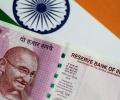
India's current account swung to a deficit for the first time in the current fiscal, with the gap coming at $1.7 billion or 0.2 per cent of the GDP in the December quarter. In the current fiscal, as the pandemic impacted trade, the current account had been in surplus in the previous two quarters, at $15.1 billion and $19 billion, respectively, as per the data on balance of payments released by the RBI on Wednesday. The critical measure of a country's external strength now stands at a surplus of 1.7 per cent of GDP for the first nine months of the fiscal year as against a deficit of 1.2 per cent in the year-ago period. In the December quarter, there was a rise in the merchandise trade deficit to $34.5 billion from $14.8 billion in the preceding quarter, and an increase in net investment income payments.

Sun Pharmaceutical Industries stock ended 2.15 per cent higher on Friday after zooming by almost 5 per cent in the morning trade on the back of an announcement that a court ruling has cleared the deck for the India's largest pharmaceutical company to launch its alopecia drug Leqselvi in the United States.

The fast-moving consumer goods (FMCG) sector has underperformed the Nifty over the past year as its 20 per cent return is trumped by 29 per cent of the benchmark index. The FMCG index saw a 2.2 per cent drop in the last session, while the Nifty lost 1 per cent. FMCG is seen as a defensive segment. The demand for staples like personal care products, groceries and snacks tend to be stable. FMCG companies are consistent dividend-payers.
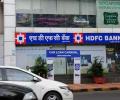
HDFC Bank on Wednesday reported a 2.3 per cent year-on-year rise in its consolidated net profit to Rs 17,657 crore for the October-December quarter, restricted by slower loan growth. On a standalone basis, the largest private sector lender's net profit came at Rs 16,735.50 crore for the period, up from Rs 16,372.54 crore in the year-ago period, but marginally down from the preceding quarter's Rs 16,820.97 crore.

Punit Goenka has resigned as the managing director of Zee Entertainment and has been appointed as CEO to have his focus entirely on operational responsibilities assigned to him by the board of the company. The board has "accepted the resignation of Punit Goenka as managing director of the company and appointed him as CEO," said Zee Entertainment in a regulatory update.

SBI Cards & Payment Services reported mixed results for the January-March quarter (Q4) of FY24. While it managed to deliver strong earnings growth, it saw a perceptible decline in net interest margin (NIM) and suffered deteriorating asset quality. Taken together, the market was disappointed with the share dropping 3.5 per cent.

Indian economy grew by 7.8 per cent in April-June -- the highest in five quarters -- before the disruptive US tariffs were imposed.

The brokerage earnings estimate for the January-March 2024 quarter (Q4FY24) for Nifty 50 companies hints at a slowdown in corporate profit growth while revenue increase is likely to be in low single digits as in the previous two quarters. According to various brokerage estimates, the companies' combined net profits are expected to grow 3.1 per cent year-on-year (Y-o-Y) in Q4FY24, the slowest in the last five quarters. For comparison, the index companies' combined net profits were up 8.2 per cent Y-o-Y in Q3FY24 and 3.4 per cent Y-o-Y in Q4FY23.

Reliance Industries Ltd on Thursday reported a 7.4 per cent rise in its December quarter net profit, as its retail business rebounded and telecom earnings rose. Its consolidated net profit of Rs 18,540 crore, or Rs 13.70 per share, in October-December - the third quarter of April 2024 to March 2025 fiscal (FY25) - compared to Rs 17,265 crore, or Rs 12.76 a share, in the same period a year back, according to a stock exchange filing by the company.

The paint sector is seeing heightened competition with the entry of deep-pocketed groups like Aditya Birla and JSW. However, some brokerages see an opportunity in select stocks.

Under the new model, the surplus distribution in the participating policyholders' fund has been modified to 90:10 in a phased manner, wherein 90 per cent will go to policyholders and 10 per cent to shareholders. Further, 100 per cent of the surplus generated out of the non-participating business will be available for distribution to all shareholders.

Shares of Tata Consultancy Services (TCS) declined after the information technology (IT) major reported a 1.3 per cent sequential drop in net profit for the March quarter, prompting several brokerages to cut their target prices. The TCS stock fell as much as 1.26 per cent during the day to Rs 3,205 per share.

Q3 revenue growth estimated at 1-3% q-o-q, currency headwinds to weigh

The share of women employed in regular salaried jobs in urban India hit a fresh low in the January-March quarter (Q4) of 2023-24 (FY24). In the same period, the share of women engaged in self-employment went up. An analysis of the latest quarterly Periodic Labour Force Survey (PLFS) data showed the share of women in regular wage work among all employed women stood at 52.3 per cent in Q4FY24, down from 53 per cent in the previous quarter.
Despite a largely stable December quarter, investors booked profit in shares of IndusInd Bank (IIB) as an increase in slippages took them by surprise. Analysts, on their part, believe investors may, now, wait for actual delivery on slippage decline, potentially limiting near-term upside. "The management has indicated that corporate slippages (from legacy stressed book) have ended and inch up in consumer finance slippages was more one-off, and should meaningfully improve Q4FY24 onwards.

India's aviation industry could return to profitability in 2023-24 for the first time since the pandemic. The industry may pare aggregated net loss by 75-80 per cent year-on-year (YoY) to between Rs 3,500 crore and Rs 4,500 crore in 2022-23 (FY23), compared with Rs 17,500 crore of net losses in 2021-22 (FY22). A combination of recovery in passenger volumes and easing cost pressures due to stable fuel and foreign exchange (forex) costs could spark a turnaround. CRISIL says domestic and international passenger traffic recovered to 90 per cent and 98 per cent, respectively, of pre-pandemic traffic (2019-20, or FY20), in April-December 2022, compared with April-December 2019.
The bank expects to grow loan book by 10 per cent in the current financial year with calibrated exposure to corporate accounts and thrust on the retail segment.

Wipro Ltd on Friday posted 2.8 per cent year-on-year rise in its consolidated net profit for December quarter, at about Rs 3,053 crore. The net profit stood at Rs 2,969 crore in the year-ago period. Revenue of the Bengaluru-headquartered IT company came in at Rs 23,229 crore in Q3FY23, 14.3 per cent higher than the same period of previous year.

Shriram Finance's (SHFL's) profit after tax (PAT) rose 10 per cent year-on-year (Y-o-Y) to Rs 2,140 crore in the fourth quarter of the financial year 2024-25 (Q4FY25).

A slowdown in hiring by India's top IT companies has resulted in a sharp increase in the industry's profit per employee in Q3FY23. The top four IT companies earned a net profit of 1.7 lakh per employee during October-December 2022, up 8.6 per cent from Rs 1.57 lakh in Q2FY23 and 16.3 per cent from a record low of Rs 1.47 lakh in Q1FY23. Earnings per employee in the third quarter were, however, still down 0.9 per cent on a year-on-year (YoY) basis.

The top 10 fund houses are slowly losing ground to their smaller peers, even as they continue to hold the lion's share in the total assets under management (AUM) of the mutual fund (MF) industry, according to an analysis of the quarterly AUM for the past six years. These fund houses had an average AUM of Rs 38.8 trillion in the third quarter (Q3) of 2023-24, which is 79 per cent of the total industry AUM of Rs 49.2 trillion. The share has come down steadily since Q3 of 2019-2020, when the share stood at 84 per cent.

Dr Reddy's Laboratories (DRL) share price plunged 6.66 per cent to Rs 1,203.50 per share on the NSE during Friday after analysts remained cautious on the company's Q3 performance and differed on its growth outlook. DRL's Q3 performance was viewed as subdued by some analysts when they adjusted it for one-time grants and incomes that the company received during the quarter.

Towards the end of February, the Reserve Bank of India (RBI) restored the risk weighting on banks loans to non-banking financial companies (NBFCs; including to microfinance institutions, or MFIs) to 100 - back to its November 2023 position - from 125. It is only a partial relief though. "Higher risk weighting on unsecured lending continues to be in place while the same on bank funding to NBFCs has been done away with. "This is a positive step by RBI," says Rajiv Sabharwal, managing director (MD) and chief executive officer (CEO), Tata Capital.

The fast-moving consumer goods (FMCG) sector is likely to report muted results in the fourth quarter of 2024-25 (Q4FY25) due to weakness in urban consumption. The weakness may persist through the first half of 2025-26 (H1FY26).

Brokerages on DMart Q3 results: Avenue Supermarts (DMart) shares slipped as much as 5.74 per cent to hit an intraday low of Rs 3,474 per share on Monday. However, the stock recovered slightly to close at Rs 3,507.95, down 4.82 per cent. Notably, the 52-week low for DMart shares is Rs 3,400. The downward movement in DMart's share price was triggered by the company's 2024-25 (FY25) October-December quarter (Q3) results, which missed Street expectations.

Equity markets this week will take cues from global trends, trading activity of foreign investors and quarterly earnings, with TCS kick-starting the results calendar on Thursday, analysts said.

'Last year, we had about 10 to 12 per cent of Hollywood films as a box-office contribution. This year already, it has jumped up to 24 per cent because the lineup is very strong.'

The Indian cement industry is hopeful of greener pastures after a long period of stress led by pricing pressures and other factors. The second half of FY25 is expected to bring respite due to price hikes, cost benefits and higher volumes, said analysts. The optimistic momentum also makes cement stocks attractive, analysts added, advising to buy dips following a period of bearish sentiment in these stocks.

Growing concerns over slower-than-expected margin recovery, amid weak deposit growth have caught HDFC Bank's investors off guard. HDFC Bank's stock on Wednesday plunged nearly 9 per cent to hit an intraday low of Rs 1,527 on the BSE after reporting weaker-than-expected earnings in the third quarter (October - December) of the current financial year (Q3FY24). The shares of India's biggest private lender closed at Rs 1,536.9, down 8.46 per cent.

From the Sensex firms, Tata Motors jumped the most by 5.54 per cent, followed by Kotak Mahindra Bank, Trent, Sun Pharma, Axis Bank, and ICICI Bank. However, Bajaj Finance, State Bank of India, UltraTech Cement and Tata Steel were among the laggards.

Tata Power saw a big sell-off, with the stock falling almost 8 per cent after declaring disappointing results for the October-December quarter (Q3) of 2023-24 (FY24) on Friday evening. The company reported net consolidated revenue of Rs 14,650 crore, up 4.4 per cent year-on-year (Y-o-Y), and earnings before interest, tax, depreciation, and amortisation (Ebitda) of Rs 2,607 crore, up 2 per cent Y-o-Y, in the quarter, led by higher sales across Odisha distribution companies (discoms) and capacity addition in renewables. This was well below consensus estimates.

Food delivery aggregator Swiggy saw its loss widen for the fourth quarter (January-March) of financial year 2024-25 (Q4FY25). The firm reported a consolidated loss of Rs 1,081.1 crore for the quarter, compared to a loss of Rs 554.7 crore in the corresponding quarter of FY24.

With high credit growth and healthy asset quality, listed commercial banks are expected to report steady growth in earnings during the fourth quarter ended March 2024 (Q4 FY24). Profits are expected to grow at 9.6 per cent year-on-year (Y-o-Y) and net interest income (NII) by 8.7 per cent in Q4 FY24, according to Bloomberg analysts' estimates. According to Motilal Oswal Securities, while bank credit growth has been robust, deposit growth has also gathered pace.

The new business premium (NBP) of life insurance companies dropped 21.7 per cent year-on-year (Y-o-Y) to Rs 30,218.71 crore in December 2024 on the back of a steep fall in business. According to data published by the Life Insurance Council, LIC's premium dropped 41.15 per cent Y-o-Y to Rs 13,523.87 crore while private insurers reported 7 per cent growth in NBP to Rs 16,694.85 crore as the industry absorbs the impact of the revised surrender value norms.

Domestic rating agency ICRA on Monday said Indian companies are likely to clock 7-8 per cent revenue growth during the March quarter of the current fiscal year, led by revival in rural demand and uptick in government spending. ICRA expects the private capital expenditure (capex) cycle to remain measured in view of the uncertainties around geopolitical developments and relatively subdued outlook on merchandise exports from India.
 © 2026 Rediff.com - Advertise with us - Disclaimer - Privacy Policy - Sitemap - Feedback - About us - Terms of use - Grievances